Mont Saint-Michel
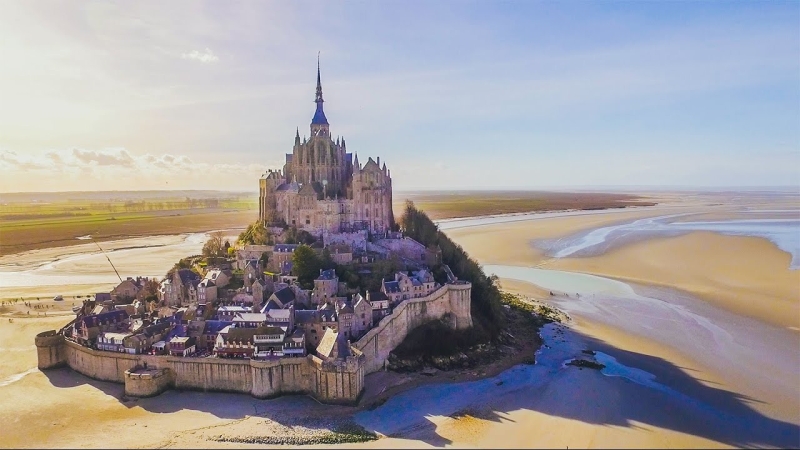
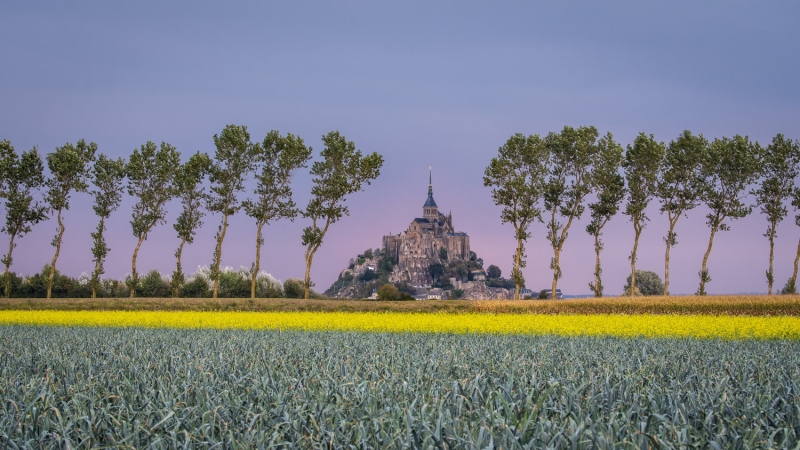
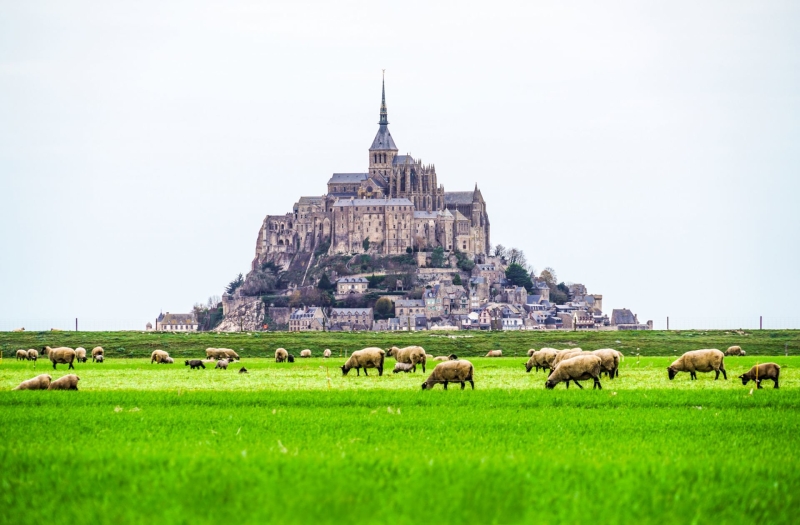
There are places that look so unusual that at first it seems as if they are the scenery for a historical film. has become such a place for meMont Saint-Michel. I have seen many beautiful cities and castles in Europe, but this island makes a very special impression. Medieval walls, narrow streets, a grand abbey on top of a cliff and famous tides make it one of the most recognizable places in France.If you are planning a trip to Normandy or just looking for an unusual attraction, Mont Saint Michel definitely deserves a separate day on the itinerary.
Mont Saint-Michel
Where is Mont Saint-Michel
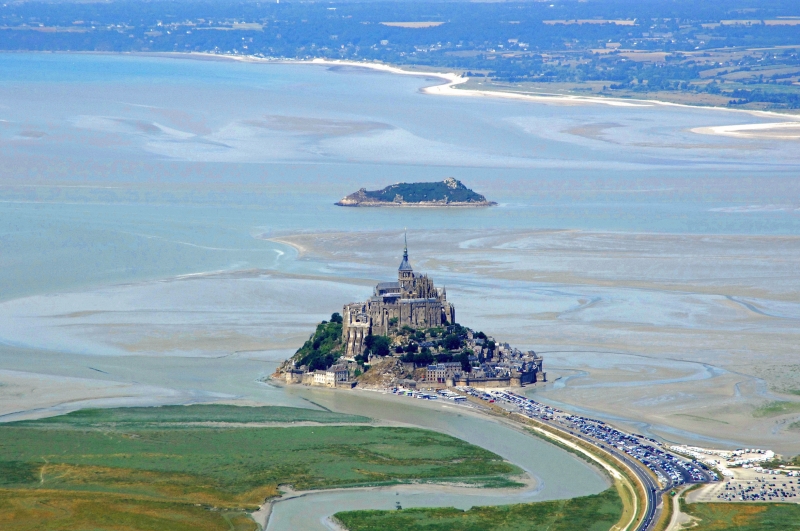
Mont Saint-Michel is located in the north-west of France, in the Normandy region, in the Manche department. It is about 360 kilometers from Paris, and the island itself is about one kilometer from the coast.
It’s pretty easy to get here today. The island is connected to the mainland by a modern causeway, along which free electric shuttle buses run. If desired, you can walk — the walk takes about half an hour and allows you to gradually see how the silhouette of the abbey is becoming more majestic.
Why is Mont Saint Michel famous all over the world
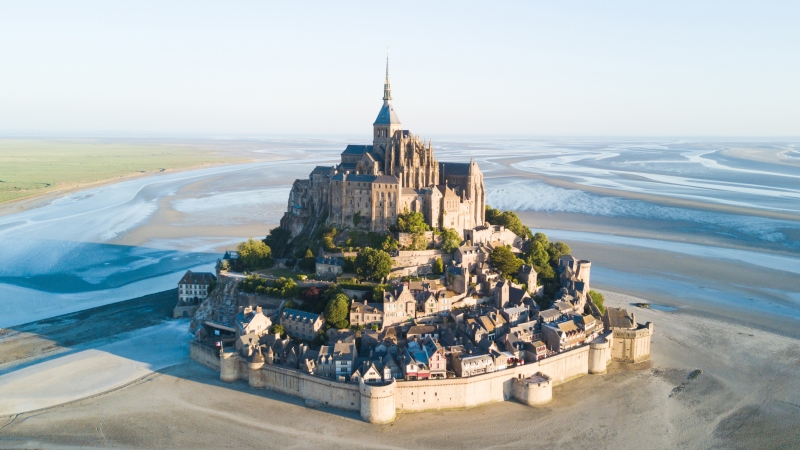
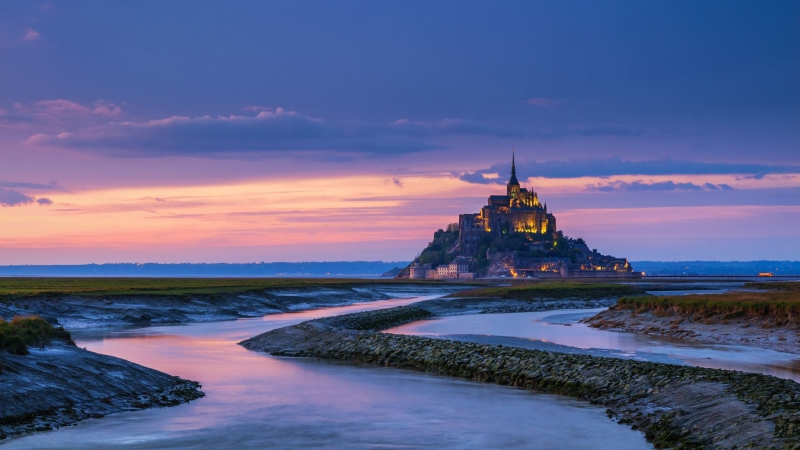
The main reason for the popularity of this place is its unusual location. During high tides, the water almost completely surrounds the island, turning it into a real fortress in the middle of the sea. When the tide starts to ebb, the water goes far away, revealing huge sandy plains.
It is the combination of nature and medieval architecture that has made Mont Saint-Michel one of the symbols of France and a UNESCO World Heritage Site.
St. Michael’s Abbey
The island’s most famous landmark is St. Michael’s Abbey, which was built over several centuries, from about the 11th to the 16th century.
When you climb up the ancient stairs, it becomes clear how difficult the work of medieval builders was. Almost every level of the complex is located at its own height, and the upper terraces offer magnificent views of the sea and surrounding sands.
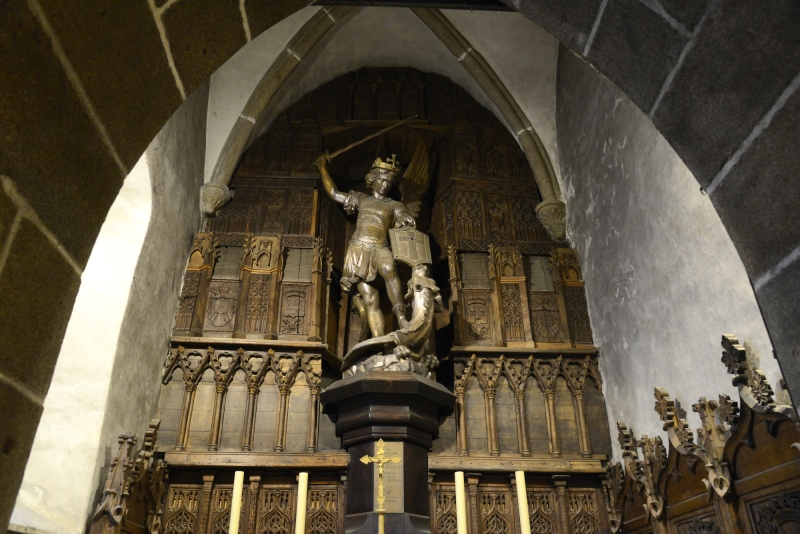
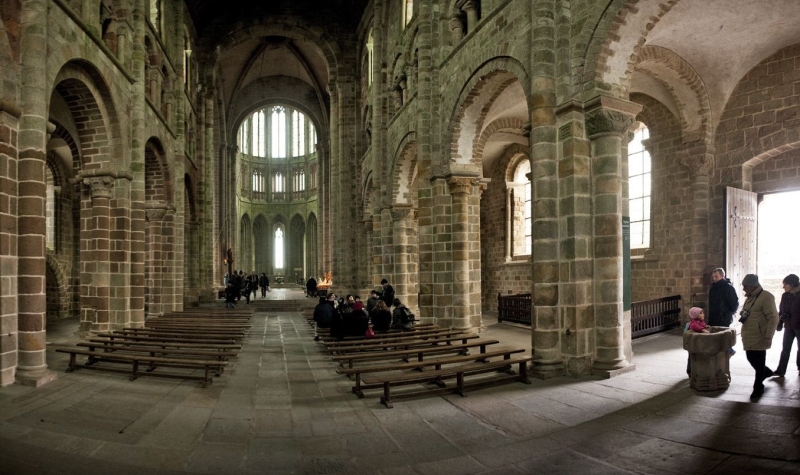
The abbey’s architecture combines Romanesque and Gothic styles. High vaults, stone galleries, courtyards and massive walls create the atmosphere of a real medieval monastery.
There is also a legend associated with this place. It is believed that Archangel Michael appeared to the Bishop of Avranches and ordered the construction of a temple here, after which the island became an important pilgrimage center.
Europe’s most famous tides
One of the main reasons to come here is to see the famous tides.
Mont Saint-Michel is famous for the fact that the difference between high tide and low tide here is considered one of the largest in Europe. In a few hours, the surrounding landscape completely changes. Where only recently there were wide sandy fields, the sea appears, and the island is again separated from the mainland.
It’s incredibly interesting to watch this process. Moreover, it is beautiful in any weather: on a clear sunny day, and under heavy Norman clouds.
If possible, I advise you to choose the time of the trip in advance so that you can see both the tide and the ebb. It is then that Mont Saint Michel reveals itself in all its beauty.
The atmosphere of the real Middle Ages
Once you pass through the main gate, the modern world seems to be left behind.
Inside the island, narrow cobbled streets, stone houses of the XIV–XV centuries, small hotels, souvenir shops and old restaurants have been preserved. Despite the huge number of tourists, it is enough to turn into a small alley or climb above the main routes — and you can feel the amazing silence.
I especially enjoyed just walking around without a specific purpose. Here, almost every turn opens up a new beautiful view: an ancient tower, a small courtyard, or another panorama of the bay.
What to see in Mont Saint Michel
In addition to the abbey itself, there are several other interesting places on the island.
You can visit small museums dedicated to the history of Mont Saint Michel, look into the former prison buildings, climb the observation decks or go on a tour of the sandbanks with a licensed guide. Such walks are especially popular because it is dangerous to go out on the sands on your own due to the rapidly changing tides and areas of quicksand.
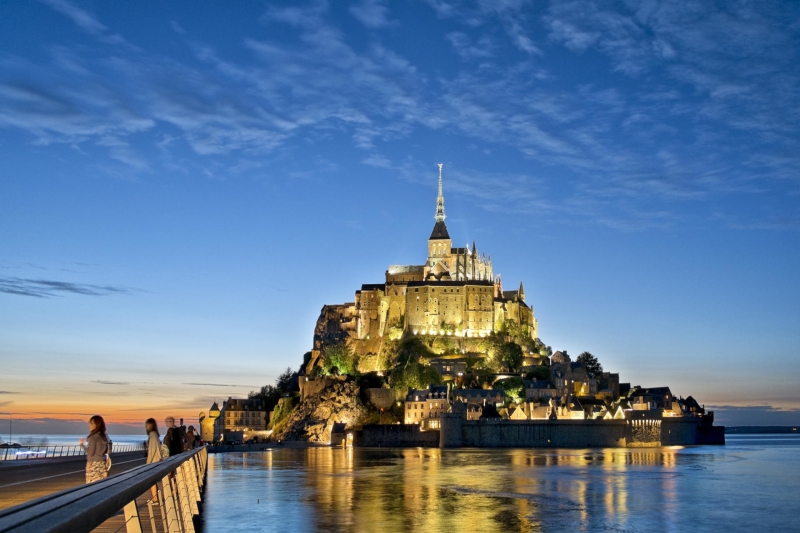
Photography lovers should stay here until sunset or arrive early in the morning. At this time, there are noticeably fewer tourists, and the island itself is beautifully reflected in the water and looks almost fabulous.
How to get there
There are several ways to get to Mont Saint-Michel.
Tourists most often arrive by train to Pontorson or Rennes, and then transfer to a bus or transfer to the island.
If you travel by car, you will not be able to drive directly to Mont Saint-Michel. Cars are parked in large paid parking lots near the village of La Caserne, where there are hotels, an information center, shops and a stop for free shuttles.
Electric buses run regularly from the parking lot to the island. If desired, you can walk the whole way.
Where to stay
You can spend the night either directly on the island or in the La Caserne area.
Hotels inside Mont Saint-Michel allow you to see the island in the evening and early in the morning, when most of the excursions have already left. It gets surprisingly quiet here at this time.
But there are also features that it is better to know about in advance. Most hotels are located in historic buildings, so the rooms are usually small, the sound insulation is far from ideal, and the service level is quite simple. At the same time, prices remain high.
If you want to save money, it is more reasonable to choose a hotel near the island. The cost of living there is noticeably lower.
If you do book a hotel directly on the territory of Mont Saint-Michel, the administration usually provides a special code that allows you to get a discount on parking.
Where to eat
There are quite a lot of restaurants on the island, but the prices here are expected to be tourist.
The average bill for a lunch for two without alcohol is usually 80-100 euros. The quality of service may vary from institution to institution, especially during the high season, when the flow of visitors is very large.
But it’s worth trying the famous local omelet at least for the sake of interest. It looks huge and very satisfying, but in fact it turns out to be incredibly airy, almost like a delicate souffle. This is one of the most famous gastronomic dishes of Mont Saint-Michel.
Mont Saint-Michel Photo 1
Mont Saint-Michel Photo 2
Mont Saint-Michel Photo 3
Mont Saint-Michel Photo 4
Mont Saint-Michel Photo 5
Mont Saint-Michel Photo 6
Mont Saint-Michel Photo 7
Mont Saint-Michel Photo 8
Useful tips before the trip
Entrance to the island is free. You will only need a ticket to visit the abbey.
Before traveling, I recommend that you check the schedule of tides on the official websites of the region. It largely depends on which views you will see during your walk.
The best time to visit is spring or autumn. There are fewer tourists, the weather remains comfortable, and walking around the island is much more enjoyable.
Most travelers spend one day here or stay one night. This is quite enough to quietly explore the main sights, climb up to the abbey, stroll through the ancient streets and wait for the tide to turn.
Is it worth going?
For me personally, Mont Saint-Michel turned out to be one of those places that really justify their worldwide fame. Literally everything is impressive here: the history of more than a thousand years, the unusual location of the island, the grand abbey and the constant play of the sea, which completely changes the surrounding landscape several times a day.
If you find yourself in France, especially Normandy or Brittany, be sure to include Mont Saint Michel in your itinerary. Even after hundreds of photos on the Internet, seeing it with your own eyes is a completely different feeling. Especially at the moment when the sea gradually surrounds the ancient walls, turning the island into a real medieval fortress.
